


Freelancers vs. White-Label Agency: Making the Right Choice for Sustainable Scaling
As businesses expand their marketing operations, delivery models that once felt efficient can start creating bottlenecks. Many teams reach a point where they must evaluate Freelancers vs. White-Label Agency options to support growing demand without compromising quality or timelines. While both approaches have their place, their long-term impact on scalability and control differs significantly.
Why Freelancers Work in Limited Scenarios
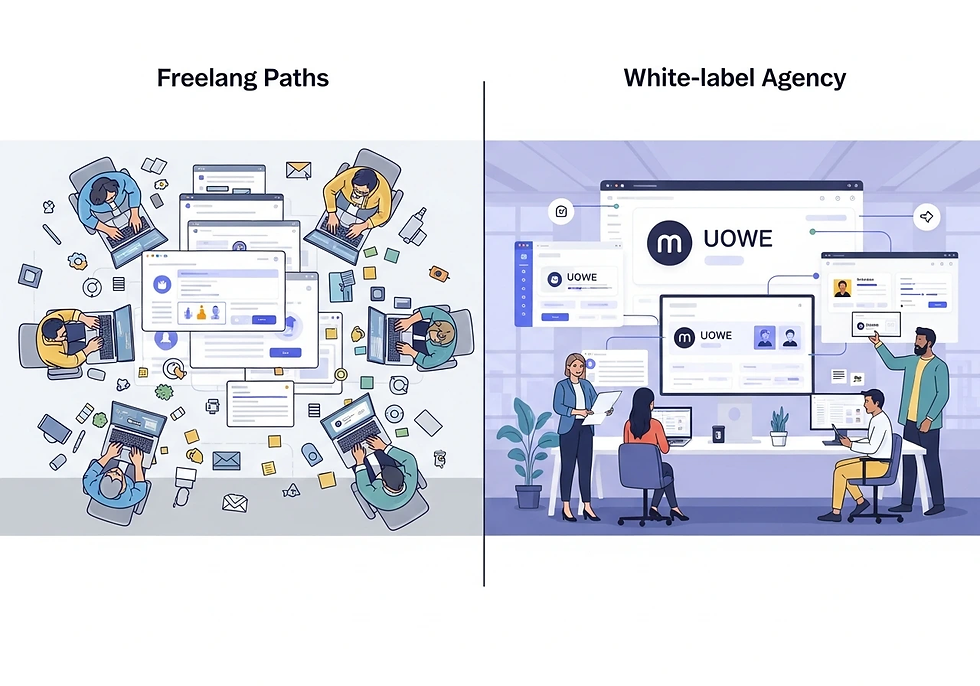
Freelancers are well-suited for short-term projects or highly specific tasks. They offer flexibility, fast onboarding, and access to niche expertise. For early-stage businesses or temporary workload spikes, freelancers can be a practical solution.
However, freelancers typically work independently and manage multiple clients at once. As project volume increases, coordinating schedules, maintaining alignment, and ensuring consistent output can become challenging. These factors often limit the freelancer model’s effectiveness at scale.
The White-Label Agency Model Explained
A white-label agency provides services under your brand while managing delivery through an established team and workflow. Instead of working with multiple individuals, businesses collaborate with a single partner responsible for execution, quality control, and capacity planning.
This model is designed to handle ongoing work and fluctuating demand. With predefined processes and accountability, white-label agencies help reduce operational friction as businesses grow.
Scalability and Capacity Management
When comparing Freelancers vs. White-Label Agency, scalability is a major consideration. Scaling with freelancers usually means hiring more individuals and increasing internal coordination. This can strain resources and introduce risks if freelancers become unavailable.
White-label agencies are built for scalability. They can adjust team size quickly without disrupting delivery, making them more reliable during periods of growth or high demand.
Consistency and Quality Assurance
Consistency is often difficult to maintain when multiple freelancers contribute to similar tasks. Differences in interpretation, experience, and working styles can lead to variations in output. Internal teams may need to invest additional time in reviews and corrections.
White-label agencies typically follow standardized quality checks and brand guidelines. This structured approach supports consistent delivery across projects and clients.
Operational Efficiency and Management Effort
Managing freelancers requires ongoing oversight, including task assignment, feedback, and deadline tracking. As freelancer numbers grow, management effort increases, pulling focus away from strategy and client relationships.
A white-label agency streamlines operations by acting as a single point of contact. This reduces internal management effort and allows teams to focus on higher-value activities.
Cost Evaluation Beyond Hourly Rates
Freelancers may seem cost-effective based on hourly rates alone. However, hidden costs such as onboarding, coordination, and rework can accumulate over time. White-label agencies often provide predictable pricing models that reflect complete delivery, offering better cost clarity as operations scale.
Evaluating total impact helps clarify the real difference between Freelancers vs. White-Label Agency choices.
Conclusion
Freelancers and white-label agencies both serve important roles, but their suitability depends on business goals and growth stage. Freelancers offer flexibility for short-term needs, while white-label agencies provide structure, reliability, and scalability. Understanding these differences helps businesses choose a model that supports sustainable growth rather than short-term convenience.



Comments