


Conversion Optimization for Ecommerce Website: Maximize Sales and Customer Engagement
For ecommerce businesses, attracting visitors is only the first step. The real challenge lies in converting those visitors into paying customers. Conversion Optimization for Ecommerce Website focuses on improving the user experience, removing barriers, and guiding shoppers toward completing purchases. A well-optimized site ensures that every interaction contributes to higher sales and stronger customer loyalty.
Why Conversion Optimization Is Essential

Even sites with high traffic can struggle if they aren’t optimized for conversions. Poor navigation, slow loading pages, or a complicated checkout can turn potential buyers away. Conversion optimization allows businesses to increase revenue without necessarily increasing traffic, making it a cost-effective strategy for sustainable growth.
Critical Areas to Optimize
1. Website Speed and Mobile Experience
Page load times directly affect conversions. Slow websites frustrate users, especially on mobile devices. Optimizing images, reducing unnecessary scripts, and ensuring responsive design are crucial to providing a seamless browsing experience that keeps customers engaged.
2. Product Pages That Convert
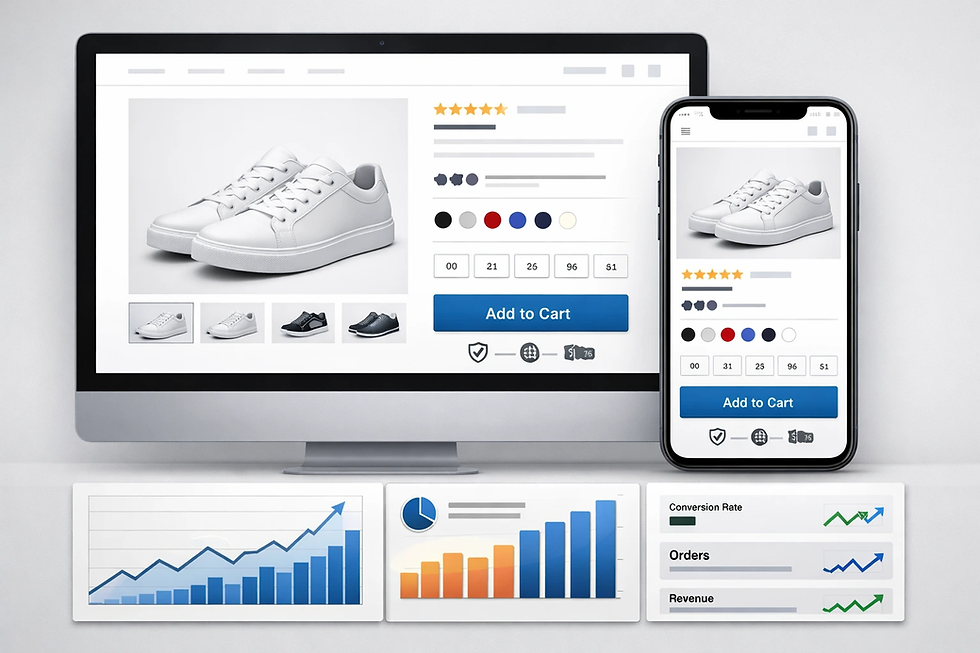
Your product pages should communicate value clearly. High-quality images, detailed descriptions, and customer reviews help visitors make informed decisions. Adding videos, interactive demos, or size guides can further enhance engagement and trust.
3. Streamlined Checkout Process
A complicated checkout is a leading cause of cart abandonment. Simplifying steps, offering guest checkout, multiple payment options, and clear security indicators helps reduce friction and increases the likelihood of completed purchases.
4. Compelling Calls-to-Action
CTAs are the final nudge visitors need to act. Buttons like “Add to Cart,” “Buy Now,” or “Checkout Today” should stand out visually and be strategically placed. Clear, action-oriented language encourages users to take the next step.
5. Build Trust Through Social Proof
Customer ratings, testimonials, and trust badges reassure potential buyers. Social proof enhances credibility and confidence, which are key to improving conversion rates.
6. Continuous Testing and Analysis
A/B testing of layouts, headlines, and button placement helps identify what works best. Using analytics tools to track user behavior, page performance, and sales funnels provides insights to refine the conversion strategy over time.
Advanced Tactics for Ecommerce Success
For businesses ready to take it a step further, advanced strategies like personalized recommendations, exit-intent popups, and retargeting campaigns can significantly increase conversions. AI-driven personalization tailors product suggestions based on visitor behavior, making the shopping experience more relevant and effective.
The Impact of Conversion Optimization
By investing in Conversion Optimization for Ecommerce Website, businesses can improve sales, reduce customer acquisition costs, and increase lifetime value. Optimized experiences ensure visitors have a seamless journey, turning traffic into measurable revenue growth.
Conclusion
Conversion optimization is an ongoing process that combines strategy, testing, and refinement. Ecommerce businesses that focus on Conversion Optimization for Ecommerce Website create better user experiences, drive more sales, and build stronger customer relationships. In a competitive online market, every improvement counts—and even small enhancements can lead to significant growth over time.


Comments